Born Famous, Working Twice as Hard: The Star Kids Who Are Ditching the Easy Lane
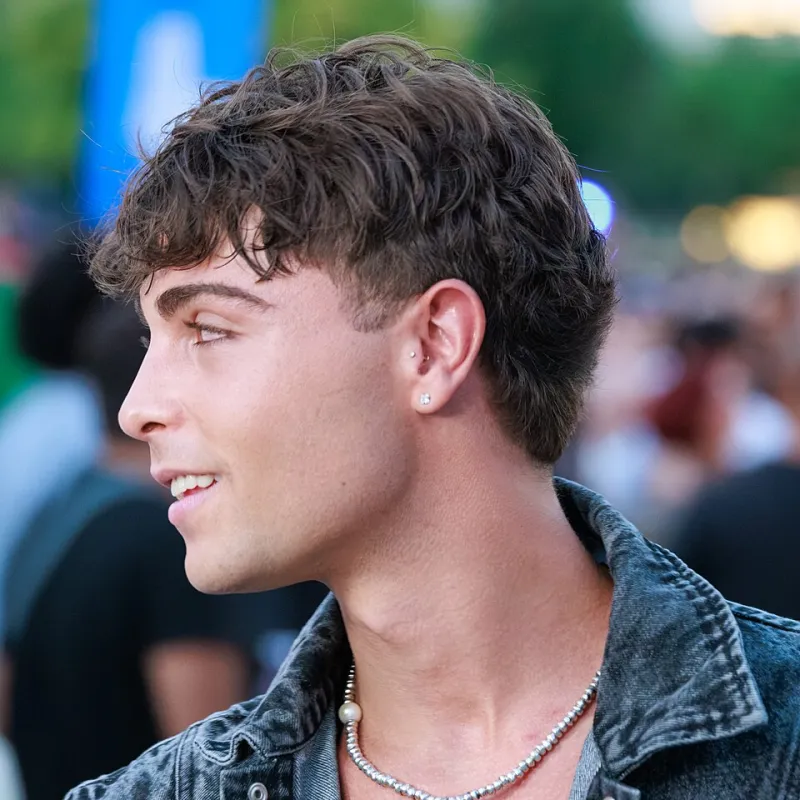
Photo: Barcex, CC BY-SA 4.0, via Wikimedia Commons
There's a certain kind of Hollywood story that practically writes itself: kid grows up in a famous household, gets handed a role, lands on a magazine cover, and the machine rolls on. It's been the industry's default setting for decades. But something's shifting. A growing number of celebrity kids — people who could absolutely cash in on their last names — are deliberately making things harder for themselves. Not because they have to. Because they feel like they have to.
And that distinction? It's everything.
The Pressure Nobody Talks About
Here's the thing about being the child of a household name: the expectations run in both directions. Sure, doors open faster. Agents return calls. Casting directors know your face before you've said a word. But those same advantages come loaded with a kind of invisible debt — a constant, nagging sense that nothing you accomplish is fully yours.
Psychologists who work with performers have started talking openly about what some are calling "legacy anxiety" — a specific flavor of imposter syndrome that hits hardest when your talent is real but your access was inherited. You know you can do the work. The question that keeps you up at night is whether anyone else will ever believe that.
For a lot of star kids, the answer to that anxiety isn't therapy or ignoring the noise. It's going out of their way to make things harder. Taking the small theater gig over the studio callback. Releasing music under a different name. Moving to a city where nobody knows their parents. It's an exhausting, often thankless strategy — and it's becoming surprisingly common.
The Authenticity Arms Race
Social media has turbocharged all of this. In an era where audiences can smell a manufactured moment from three scrolls away, the "I earned this" narrative has real currency. Fans aren't just watching what celebrities do anymore — they're watching how they got there. The origin story matters as much as the destination.
This puts legacy talent in a genuinely weird spot. If you lean into your connections, you risk being dismissed as a product of privilege. If you spend all your energy distancing yourself from those connections, you risk looking like you're performing humility — which, in the content economy, reads almost as bad as the original sin.
Industry insiders describe it as a no-win optics game. A veteran talent manager who works with several second-generation performers put it bluntly: "These kids are playing defense from day one. They walk into a room and half the people there have already decided the story. The ones who break through aren't necessarily the most talented — they're the ones who figure out how to rewrite the narrative without making it look like that's what they're doing."
When the Hard Path Actually Pays Off
So does the strategy work? The honest answer is: sometimes, and rarely quickly.
There are genuine success stories — performers who spent years in near-anonymity before their family name became a footnote rather than the headline. The pattern tends to look the same: a sustained period of low-profile work, a breakout moment that happened on its own terms, and then a retrospective reframing where the famous family becomes context rather than cause.
The key variable seems to be time. Audiences are remarkably forgiving when they feel like they discovered someone organically. If a star kid puts in enough runway before the big moment, the legacy connection stops feeling like a shortcut and starts feeling like interesting backstory.
But that runway is brutal. We're talking years of smaller paychecks, fewer resources, and constant second-guessing — all while watching peers with less talent but more willingness to leverage their names move faster. The psychological toll is real, and not everyone makes it through with their motivation intact.
The Industry Is Watching — and Slowly Changing Its Mind
What's interesting is that Hollywood itself is starting to reckon with this shift in audience sentiment. The nepotism conversation, which used to be whispered at industry parties, went fully mainstream in the last few years. Think pieces, social media callouts, and viral casting debates have forced a level of transparency that the industry wasn't exactly volunteering.
The response from studios and networks has been... complicated. On one hand, legacy connections are still enormously valuable — they reduce risk, they come with built-in PR angles, and the entertainment business has always been relationship-driven at its core. On the other hand, an actor or musician who arrives with a ready-made credibility story is increasingly seen as a better long-term investment than one who'll spend their career managing backlash.
Some casting directors are quietly noting that they're more likely to take a chance on a famous kid who's done the work — theater training, indie credits, music released under a pseudonym — than one who's simply trading on access. Whether that reflects a genuine values shift or just savvier optics management is up for debate.
The Ones Who Went Underground
Perhaps the most fascinating cases are the celebrity offspring who didn't just choose a harder path — they chose an invisible one. Artists who released debut albums under different names. Actors who spent years in regional theater in cities where their parents' fame didn't follow them. Writers and directors who built entire careers before anyone connected the dots.
When these stories eventually come out — and they usually do — the public reaction is almost universally warmer than it would have been otherwise. There's something that resonates about someone choosing difficulty when ease was available. It maps onto a very American idea about earned success, about the value of struggle, about authenticity as its own reward.
Whether that reaction is entirely fair is a separate question. After all, even the celebrity kid who moves to a new city and takes a day job to fund their art still has a safety net most struggling artists can only dream about. The playing field was never actually level — it just looked different.
What This Generation Is Really Telling Us
Maybe the most honest read on all of this is that the star kids grinding for credibility aren't just navigating personal psychology or industry optics. They're reflecting something back at us about what we want from fame right now.
We're in a cultural moment that's deeply suspicious of unearned advantage — and equally hungry for proof that talent and effort still mean something. The celebrity kid who works twice as hard to prove themselves isn't just managing their own anxiety. They're giving audiences a story they actually want to believe in.
Whether that story is fully true, or partly performance, or some messy combination of both — well, that's kind of the whole thing, isn't it? In an industry built on constructed narratives, even the rejection of easy fame has a script. The difference is, this one's a lot harder to memorize.