Nobody Won the Streaming Wars — Except the Person on Your Couch
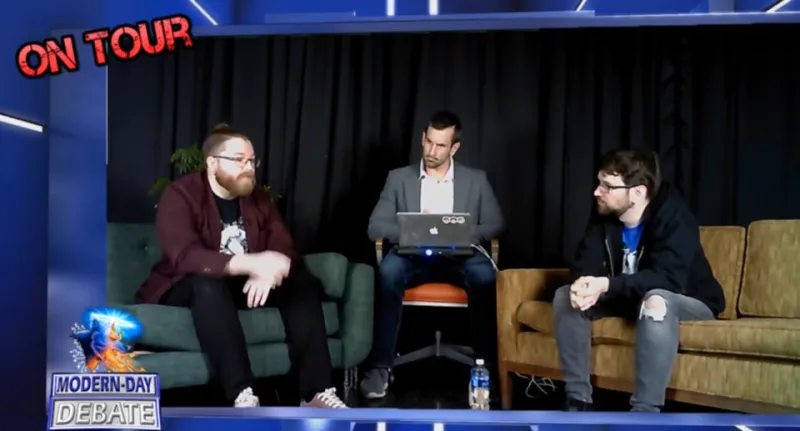
Photo: Modern-Day Debate, CC BY 3.0, via Wikimedia Commons
For a while there, it felt like every tech giant and legacy studio was locked in some kind of arms race. New platforms were dropping every few months, each one promising the content library that would finally make you ditch the competition. Billions got poured into original programming. Celebrities signed nine-figure deals. And somewhere in the middle of all that chaos, the average American just... sat on their couch and watched whatever was free with their parents' login.
Well, that era is officially over. And the aftermath looks nothing like what the boardrooms predicted.
The Great Password Purge Changed Everything
When Netflix rolled out its password-sharing crackdown in 2023, the internet had a full meltdown. Think pieces flew. Memes flooded every feed. People swore they'd cancel their subscriptions out of spite. But here's what actually happened: Netflix gained subscribers. A lot of them.
The move forced millions of freeloading viewers — and yes, we're all a little guilty — to either pay up or walk away. Enough of them paid up that other platforms rushed to copy the playbook. Disney+, Max, Peacock — they all started tightening the screws on shared accounts while simultaneously raising prices and launching ad-supported tiers.
The result? Streaming stopped being a casual utility you barely thought about and became something you had to actively choose. That shift in psychology turned out to matter a lot.
Consolidation Is Quietly Reshaping the Landscape
If you've noticed your streaming bill creeping up while the number of services you actually use has somehow shrunk, you're not imagining things. The industry has been consolidating at a pace that would've seemed wild just five years ago.
Paramount+ and Showtime merged into one bundle. Max absorbed Discovery content. Apple TV+ kept its small-but-prestigious footprint while quietly becoming the platform serious TV people talk about at dinner parties. Meanwhile, smaller niche streamers — the ones built around horror, anime, or classic films — have been getting swallowed up or quietly shut down.
What's left is a landscape that looks a lot more like the old cable bundle than anyone in Silicon Valley wanted to admit. You've got your three or four major players, a handful of scrappy alternatives, and a growing pile of services that are technically available but that most people have already forgotten exist.
Creators Stopped Waiting for a Platform to Pick Them
Here's the part of the story that doesn't get enough attention: while the big platforms were busy merging and restructuring, a whole generation of creators quietly built something the studios still can't fully compete with.
Substack, Patreon, YouTube memberships, podcast subscriptions — the infrastructure for going direct to your audience has never been more mature. And increasingly, the talent that streaming platforms spent years cultivating is using those tools to build independent revenue streams that don't require a greenlight from anyone.
Writers who got caught up in the WGA strike came out the other side with a clearer sense of their own leverage. Showrunners with proven track records are structuring deals differently. Some are bypassing traditional development altogether. The creator economy isn't replacing Hollywood, but it's definitely eating into its monopoly on storytelling.
So Who's Actually Thriving Right Now?
Let's be real about the scoreboard. Netflix is still the dominant force — it has the subscriber base, the global reach, and enough hit shows in rotation to keep people from canceling even when they're annoyed. Its live sports experiments and gaming expansions are early-stage but signal where it's trying to go.
Max has quietly had one of the stronger content runs, leaning hard into prestige TV and HBO's brand cachet. It's not winning on volume, but it's winning on reputation — which, in a crowded market, is actually a smart position.
Disney+ is in an interesting spot. The Marvel and Star Wars pipelines have cooled off creatively, and subscriber growth has plateaued in ways that have made Wall Street nervous. But the kids' content library is unbeatable, and as long as parents need something to put on, Disney+ has a guaranteed floor.
Peacock is the quiet underdog story. NBC's streaming arm landed the NFL, some surprisingly good originals, and a price point that makes it an easy add-on. It's not flashy, but it's functional — and in 2025, functional is underrated.
Apple TV+ remains the industry's most confusing success story. Small catalog, high quality, and bundled into so many Apple devices that millions of people have access to it without ever actively signing up. It's less a streaming service and more a prestige content imprint masquerading as one.
The Viewer Rewrote the Contract
Here's the real headline underneath all of this: the power dynamic between platforms and audiences has fundamentally shifted, and it's not going back.
When streaming was new and cheap and password-sharing was basically encouraged, viewers got used to having everything on demand for almost nothing. That era spoiled us — and it also trained us to cancel and re-subscribe strategically, binge a show in a weekend, and move on. Platforms built their entire growth models on subscriber counts, not engagement depth, and viewers figured out how to game that.
Now that prices have gone up and the rules have tightened, viewers are making harder choices. They're keeping one or two services at a time, rotating in and out based on what's dropping. They're watching more free, ad-supported content on Tubi, Pluto TV, and YouTube than the industry's premium players would like to acknowledge. And they're spending more time on short-form content than any single streaming platform can capture.
What's Actually Coming Next
The next phase isn't going to look like the streaming wars we just survived. It's going to look more like a negotiation — between platforms that need consistent revenue and viewers who've gotten very good at saying no.
Bundling is already making a comeback. Verizon, Apple, and various telcos are packaging streaming services together in ways that echo the cable packages everyone supposedly left behind. The wheel turns.
Live content — sports, awards shows, cultural events — is becoming the new battleground because it's the one category that still demands real-time viewing. Whoever locks up the most compelling live rights will have the stickiest subscribers.
And creators? They'll keep finding ways to reach audiences directly, with or without a platform's blessing. The tools exist. The audiences are there. The only question is whether the big streamers can offer something valuable enough to keep talent inside their walls.
The streaming wars may be over, but the negotiation is just getting started. And for once, the person holding the most cards isn't sitting in a corner office in Los Gatos or Burbank.
It's you, remote in hand, deciding what's actually worth your $15.99 this month.