The Cartoon Band Has a Tour Bus Now: Inside the Strange Business of Fictional Acts Going Live
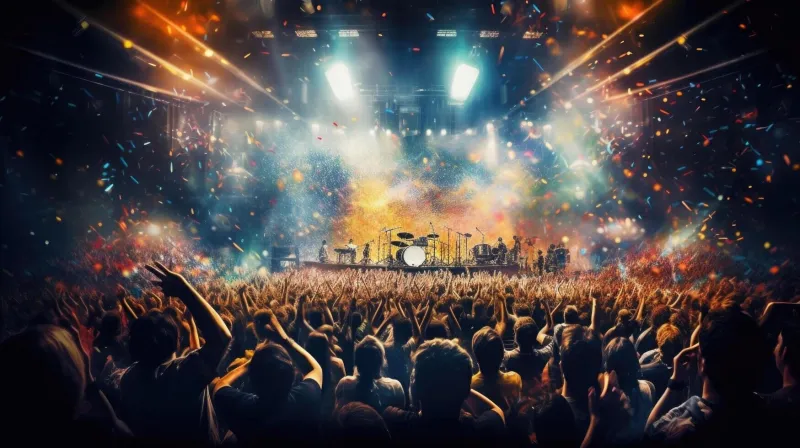
Photo: concert crowd fictional band merch tour bus neon lights, via rockintown.com
There was a time when the fictional band was a joke with a soundtrack. The Monkees were a TV product built to sell records. Gorillaz were a cartoon supergroup with real hooks. Dethklok were a metal punchline that somehow ended up on actual tours. Daisy Jones & The Six were a streaming-era nostalgia trip with a vinyl campaign attached. In 2026, though, the fake band is no longer a one-off stunt. It is a business model with a release calendar.
The shift is simple: fans no longer just want the show. They want the band to exist outside the show. A series can end, but a fictional act can keep releasing singles, playing dates, and selling hoodies. The screen is the origin story. The tour is the sequel. The merch table is the proof.
The Rights Are the Real Setlist
A fictional band looks like a creative choice. Behind the scenes, it is a stack of rights. There is the master recording, the publishing, the trademark, the likeness of the actors, and the underlying IP of the show. When a streamer or studio decides to take a fake band live, the first conversation is not about setlists. It is about who controls what. That complexity can be a feature. A fictional act can be reanimated, recast, or rebooted without the usual baggage of a real artist's contract. But it also means every T-shirt, lyric video, and tour poster has to clear a maze of approvals. The acts that work are the ones where the rights are clean enough to move fast. The ones that stall are the ones where nobody can agree on who owns the bass player.
Why the Algorithm Loves a Fake Frontman
Real artists come with real risk. A fictional band comes with a story. That story is already optimized for clips, edits, and playlists. A 45-second scene becomes a TikTok sound. A fictional single becomes a moody playlist entry. A fake feud between band members becomes a week of fan theories. The algorithm does not care whether the band is real. It cares whether the audience keeps engaging. And fictional acts have a built-in advantage: they can be everywhere without ever being off-brand. They can appear in a scripted series, a late-night bit, a game, and a brand campaign without the same reputational math. That is catnip for marketers. It is also why labels are more willing to take a meeting.
The Merch Table Is the Plot
The real tell is not the chart position. It is the merch. Fictional bands sell artifacts that make the fiction feel physical. A tour poster for a venue that only exists in the show. A vinyl variant with a fake band photo. A hat that looks like it was bought at a concert in a town that was built on a soundstage. Fans are not just buying a product. They are buying a piece of the world. That is why the best fictional-band campaigns feel like an extension of the writing, not a license slapped on a hoodie. The merch tells its own story. The tour does too, even when the tour is a mix of animation, holograms, and actors performing in character. The audience knows it is a construct. That is part of the fun.
The Live Show Problem
A fictional act can release music easily. A live show is harder. You need a band, a stage, a reason for people to buy a ticket. Some productions lean on animation and big screens. Some put actors in character and let the audience play along. Some use holograms, which still feel like a magic trick that is running out of astonishment. The common thread is that the concert is not just a concert. It is an episode. It has a narrative, a set piece, a finale. That is more expensive than a normal tour, but it also gives fans something they cannot get from a playlist. The risk is overdelivering a gimmick. The reward is a live event that feels like a secret handshake.
When the Joke Becomes a Franchise
The final piece is catalog mining. Studios are looking at old films and shows and asking a new question: can this fake band have a second life? A cult movie with one catchy song. A cartoon with a devoted fan base. A drama with a soundtrack that outlived the plot. The appeal is obvious. A fictional act is a franchise with a built-in pilot, a built-in audience, and a built-in aesthetic. But the risk is just as obvious. If the corporate machinery becomes too visible, the joke dies. Fans can smell a cash grab. The fake band works when it feels like it escaped from the screen, not when it feels like it was assembled in a boardroom. In 2026, the fake band is real. The only question is whether it can stay weird.